Blogs that publish themselves.
Then fix themselves.
Aeoly is an AI SEO tool that writes and publishes your blog on autopilot, then watches Google to see what actually ranked. Whatever is stuck on page two, it rewrites. Content that gets better after it goes live.
Reads up to 40 pages while you watch. Report on the next screen, at a private link. No card, no account.
This is what is happening to your blog right now
None of it announces itself. There is no alert, no red banner, no email. The traffic simply does not arrive, and the reason is sitting in eight places you have no reason to look.

You publish and nothing moves
The post goes live, weeks pass, and the traffic never arrives.

Google never picked it up
A page that is not in Google cannot rank, and nothing tells you which of yours are missing.

Your own pages compete
Two posts chasing the same search, so neither of them wins it.

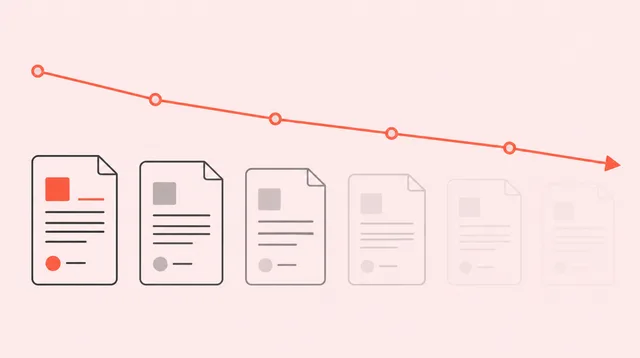
Old posts quietly fade
Traffic slips a little every month and nobody is watching that graph.

Nobody clicks your result
You rank on the first page, the title does not earn the click, and it goes to someone else.

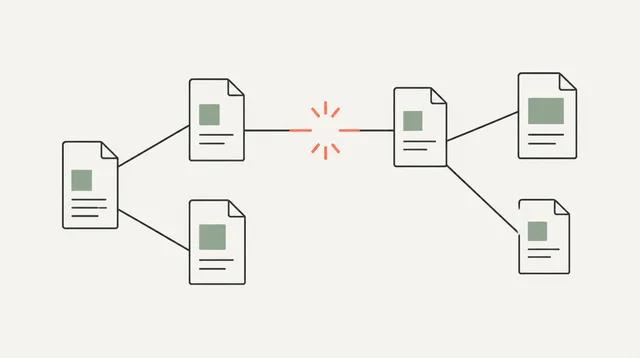
Broken links pile up
Dead links and redirect chains build up in places you will never click through.

Weak drafts go straight out
It writes, it publishes itself, and Google counts a thin page against the whole site.

You cannot see what it costs
Credits disappear and the invoice at the end of the month explains nothing.
Aeoly is built to find all eight and do something about each one. The scan below starts with the ones on your site.
None of it is hard. It is just every week, forever.
Any one of these takes an afternoon. It is doing all of them again next week, and the week after, that quietly stops. The cadence is always the first thing to break, and a blog that stops halfway is worth less than one that was never started.
Aeoly does every line of that on a schedule, and keeps doing it in the weeks you are busy with something else.

Get your Sundays back.
You did not start it to write meta descriptions on a Sunday. The work still has to happen, it just does not have to happen to you.

Keep the thinking. Hand over the typing.
Strategy is the part nobody can automate: which market, which angle, which offer. The brief, the draft, the upload and the follow-up check are not that.
See what is wrong in about a minute
Enter your address. Aeoly reads every page of your real site, follows every link between them, and runs 42 checks. For each problem you get plain words on what it is, why Google cares, and the exact fix. Many of them Aeoly can just do for you, with one click.
- One score, and every page that pulled it down
- Worst problems first, with why Google cares
- Unlinked pages and chained redirects other tools miss
- Titles, descriptions and image text: fixed for you in one click
- Yours to keep. Private link, no expiry
- 200/
- 301/pricingchained redirects
- 200/blogtoo little text
- 200/blog/best-crm-for-freelancersno description
- 200/blog/old-buyers-guideunlinked page
- 404/features/reportingbroken internal link
Nothing publishes under 70
Every draft is scored before it can reach your site. Weak ones wait for you, with the reasons listed. Google now penalises mass-produced AI filler, so the cheapest place to deal with a bad page is before it exists. Not after it has cost you a ranking.
Six things Aeoly does to a page that is not winning
It reads your own Search Console numbers and gives every page a decision, with the figures behind it attached. So the answer to "why this page?" is a sentence, not a score. Every change then gets 28 days alone before we judge the result.
- /blog/crm-pricing-comparedGoogle position 8.4 · 1.2% click rateRewrite the title+0 clicksestimated
- /blog/best-crm-for-freelancersGoogle position 14 · clicks down 38% in 90 daysRefresh the content+0 clicksestimated
- /blog/invoicing-tools2 pages · 1 searchMerge them+0 clicksestimated
It gets better every month, not worse
Everyone else stops at publish, which is exactly where content starts losing traffic. Aeoly keeps watching: your rankings, which pages Google has listed, the searches a page almost ranks for. What climbs is left alone. What stalls goes back through the loop.
Aeoly vs other tools
All of them write posts. All of them rewrite the ones that stall. That part is settled, and the table below says so. The difference is everything around it: whether anyone reads the site those posts land on, whether a weak draft can reach it, and whether you can see what it cost.
All three answer every row the same way, so they share a column here. The full table, tool by tool, is on a wider screen.
The writing was never the expensive part. The expensive part is a post sitting on page two for a year while you assume it is working.
Find out which of your pages are doing that, freeHow it works
Easy as one, two, three. Setup is the only part you touch, and it takes about as long as reading this sentence.
Point it at your site
Type the address. Aeoly reads your pages, follows the links between them, and tells you what is broken. Nothing to install.
Connect Google and your site
Sign in with Google once, read-only. Then pick where posts should go: WordPress, Webflow, Shopify, Ghost and more.
Let it write and fix
It writes from what it found, scores every draft, and publishes only what clears the bar. Then it watches what ranked.
What it does while you are not looking
Six stages that run on their own, in the order the work actually happens. Each one is a real screen in the product.
Google Search Console, Google Analytics and Bing on one chart
Clicks, impressions (how often you showed up in search), where you rank on Google, and conversions (sign-ups or sales). For the whole site and for every page, pulled from your own accounts. Read-only, and connected by the same sign-in that creates the account.
- Google Search Console · Google Analytics · Bing Webmaster in one view
- Links from other sites: which sites link to you, and who links to your competitors but not to you
- Whether Google's AI Overviews (the AI answer at the top of some searches) cite you, and who gets cited instead
That last step is the whole product. Everyone else stops at five.
42 checks. 8 categories. One scan.
Every finding is compared to your last scan, so you can see what you fixed and what came back. Safe ones become a change you can apply in a click, traced to the exact finding that caused it.

Visible to Google
11- Page is set to noindex
- No robots.txt found

Titles and descriptions
8- Missing page title
- Title length outside the display range

Content
6- No H1 heading
- Multiple H1 headings

Links
5- Broken internal link
- Broken external link

Speed
5- Slow server response
- Very large HTML document

Structured data
3- No structured data
- Structured data is not valid JSON

Language and regions
2- No lang attribute on <html>
- hreflang without a self-reference

Security
2- Mixed content on an HTTPS page
- Page served over HTTP
Which of the 42 is your site failing?
Find out in about a minute. Here is everything you get, and everything it costs.
- All 42 checks, on up to 40 pages of your real site
- Your score, and every finding that pulled it down
- Plain words on what each one is and the exact fix
- Results in about a minute, not a sales call
- The report stays at a private link that does not expire
- Sign in free and the scan becomes your first audit, nothing re-run
Twelve screens. Everything SEO in one place.
Six of them are the loop. The rest answer the questions the loop raises: why a page is not showing on Google, why it is slow, who is linking to the other guy.
Analytics
Google, Bing and Google Analytics on one chart.
This month's updates
Your to-do list, ranked by the clicks it is worth.
Keyword research
How many people search for it, how hard it is to rank, and what they want. Grouped and scheduled.
Content briefs
What the top results cover, and the gap you can fill.
Content
Every article, its score, and a full editor.
Calendar
Posts, changes and scans on one grid.
Indexing
Weekly checks on which pages Google has listed, and why any are missing.
Backlinks
Who links to your competitors but not to you.
AI search
Whether Google's AI Overviews (the AI answer at the top of some searches) cite you, or your rival.
Page speed
Real speed data from real users.
Fixes
One-click corrections, each with a before and after.
Autopilot
One switch. Your budget is the only brake.
It posts straight into your site
An approved article goes straight to where your site actually lives. Then Aeoly reads back from Google Search Console and Google Analytics to see how it did. Your login details are kept per site and tested the moment you save them.
WordPress
Publish to a WordPress site you host yourself.
Webflow
Sync into your Webflow collection, staged or live.
Shopify
Writes into your Shopify store blog, not a separate site.
Framer
Framer does not let outside tools write to its blog yet. A developer can use the webhook for now.
Wix
Post straight to Wix Blog, as a draft or published.
Notion
Fill a Notion database with drafts, tables and all.
Ghost
Posts straight into Ghost, formatting intact.
WordPress.com
The hosted kind, where you cannot install plugins.
Next.js blog
For developers. Adds each post as a file straight into your site's code.
WooCommerceSoon
Your WooCommerce store's blog, on the WordPress it runs on.
BigCommerceSoon
Posts into your BigCommerce blog.
SquarespaceSoon
Straight into your Squarespace blog collection.
GoHighLevelSoon
For agencies running client sites and funnels in one place.
SanitySoon
Writes documents into your Sanity dataset.
ContentfulSoon
Creates entries in your Contentful space.
StoryblokSoon
Stories into your Storyblok space, draft or published.
StrapiSoon
Entries into your self-hosted Strapi.
DrupalSoon
Nodes into Drupal, through its JSON API.
HashnodeSoon
Straight to your Hashnode blog.
Webhooks
For developers. Connect anything: the finished article is sent to a web address you choose.
Questions?
An AI SEO tool that runs the whole loop rather than one step of it: it picks the keywords, writes the articles, publishes them to your site, tracks what ranked, and rewrites the pages that stall. It starts with a free audit of 42 technical checks on your real site.
Yes. No card, no call. Aeoly reads up to 40 pages of your real site, runs all 42 checks, and hands you the report at a private link that does not expire.
Not until you say so. Out of the box, Aeoly writes drafts and saves them for you to approve. Publishing on its own is a separate switch that starts off, and even then only articles scoring 70 or better go out. Anything lower waits as a draft with the reasons listed.
Each article starts from a brief built on what is ranking on Google right now. Then it is scored for quality. Filler, padding and made-up statistics lose points. A clear angle and real numbers earn them. Below 70 it never reaches your site. You can edit anything before it goes out.
That is the entire point. Aeoly leaves a change alone for 28 days so the numbers mean something. Then it reads your Google Search Console data and decides what to do: refresh it, retitle it, aim it at a different search, merge it with another page, or leave it alone because it is climbing.
WordPress, WordPress.com, Webflow, Shopify, Ghost, Wix Blog, Notion, Next.js blog (GitHub), Framer or Blogger. Developers can also use a webhook to connect anything else.
One switch pauses everything. There is also a running cost total. It records every paid lookup as it happens, so you can watch the cost adding up instead of finding it on an invoice.
The scan is free and stays free, and so is a Free account, with no card. Paid plans, which add the articles, start at $99 a month billed yearly, and each one begins with a 7-day trial. Every plan is on the pricing page.
Point it at your site. Let it close the loop.
The scan is free and needs no account. If you like what it finds, sign in with Google and Aeoly starts fixing, writing and publishing for you. You can stop it with one switch.